Licensed in California, Florida, Louisiana, Massachusetts, New Hampshire, Texas, Washington, the District of Columbia, and before the USPTO.
© 2025 Lloyd & Mousilli. All rights reserved.

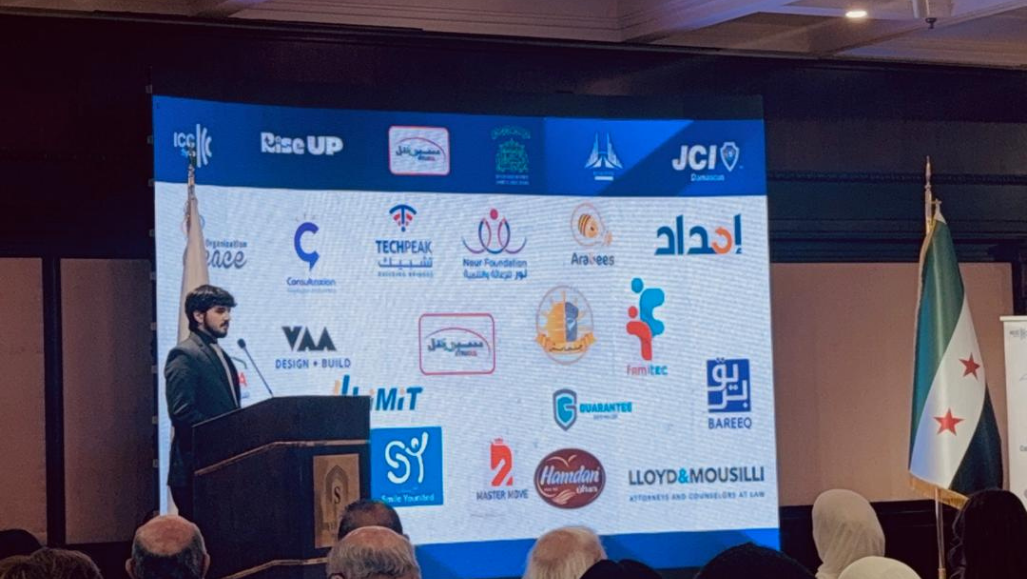
On October 16th, I had the privilege of representing Lloyd & Mousilli in the Companies Debate Challenge organized by JCI Syria and sponsored by Damascus Chamber of Commerce and Syriatel. The motion was a compelling one for any HR professional like me: "Employee satisfaction is more important than client satisfaction in the long term."
The twist? Our team was tasked with arguing the opposition.
As the only Syria-based employee for Lloyd & Mousilli, my first challenge was assembling a team. I was thrilled when my colleague, Sidra, and my mother, whose extensive professional experience I deeply admire, volunteered to join me. Together, we underwent a rigorous five-day training program by JCI, mastering debate rules, persuasive techniques, and public speaking.
The irony was not lost on me. As a professional experienced in HR & Administration, I am a natural advocate for prioritizing employee satisfaction. This challenge forced me to set aside my personal bias and build a compelling, evidence-based case for the critical role of client satisfaction. I focused on how customer-centric strategies ultimately create the financial foundation that enables investment in employees in the long term.
On debate day, we presented our case against a formidable opponent: Syriatel, one of Syria's telecom giants. My key arguments included:
1. The Economics of Loyalty: Fueling Stability and Investment
I argued that a stable revenue base from loyal customers is the engine for long-term growth and investment in employees. It's a well-documented principle that retaining a customer can cost 5 to 25 times less than acquiring a new one (source: Harvard Business Review). These savings and predictable revenue provide the financial stability necessary to fund robust employee programs, competitive compensation, and comprehensive training.
2. Quality as a Foundation of Financial Stability & Employee Security
I also contended that a relentless focus on product quality builds deep customer trust, which translates directly into long-term financial stability. This financial health is the very foundation of job security, fair compensation, and attractive benefits for employees. A company that cannot guarantee its future revenue cannot guarantee its employees' futures.
While we did not win the challenge to advance to the next round, the true victory was in the journey. The camaraderie of our unique team, the thrill of critical thinking under pressure, and the pride of representing Lloyd & Mousilli at the Damascus Chamber of Commerce were unparalleled successes.
This experience was a profound professional development exercise. Here are my key takeaways:
This final lesson—the power of seeing all sides of an issue—struck me as universally valuable. The format of a structured debate is a tool any organization can use. Imagine applying this to internal strategy meetings: by formally arguing opposing viewpoints on a key business challenge, teams can stress-test their plans, uncover hidden blind spots, and foster a culture of innovative problem-solving. It’s a practice that builds stronger, more resilient strategies by ensuring every perspective is heard and every idea is rigorously examined.
I am immensely grateful to JCI Syria for this opportunity and to my incredible teammates, Sidra and my mother, for their courage and collaboration, Lloyd & Mousilli for their support. This journey was a powerful reminder that the greatest professional growth begins at the edge of your comfort zone.
A research paper co-authored by Managing Partner Feras Mousilli and Research Assistant Grayson Griffith has been published in the Economic Bulletin of the National Technical University of Ukraine “Kyiv Polytechnic Institute.”
Titled “Ukraine Startup Profiles: Rising and Raising,” the article explores the resilience and ingenuity of Ukraine’s emerging startup ecosystem—particularly the entrepreneurs and innovators driving progress in Kyiv and beyond. Drawing from firsthand research and cross-border experience advising technology startups, the publication highlights how Ukrainian founders are building globally competitive companies despite challenging circumstances.
You can read the full article by clicking here.
.png)
Foreign companies interested in opening a branch, representative office, regional office, liaison, or agency in Syria must follow a clear set of requirements laid out by local authorities. The process is document-heavy, but when approached step by step, it becomes manageable. Below is an overview of the essential documentation, certification steps, and application details you will need to prepare.
The core of the registration process lies in the documents submitted on behalf of the parent company. Syrian authorities require the following:
All of the above documents must be properly certified to be accepted in Syria. This involves three levels of authentication:
This multi-step process ensures that documents are both valid in the home jurisdiction and recognized under Syrian law.
Beyond the supporting documents, the registration application itself must include detailed information about both the parent company and the Syrian branch. Authorities will request:
The estimated cost of registration ranges from $700-900, covering government fees, notarization, and certifications. Processing time can vary:
After initial registration approval, foreign companies must also complete the following steps:
Branches in Syria operate under strict financial oversight:
While the requirements may appear extensive, each step is intended to provide clarity, ensure transparency, and establish accountability for foreign entities operating in Syria.
With careful preparation, and by following the order outlined above, companies can position themselves for a smooth registration process and a solid legal foundation in the Syrian market.
Backed by decades of experience in assisting U.S. companies and international firms expand globally, Lloyd and Mousilli is well positioned to act as your guide in bridging the gap between the international white-glove law firm experience Western countries expect and the local expertise needed to deliver the most effective solutions. Whether you are exploring entry into the Syrian market, seeking compliance clarity, or building long-term strategies for growth, our team stands ready to help you seize this historic moment with confidence.
“Establishing a Branch of a Foreign Company in Syria.” Syrian Investment Gate (SIG), 29 June 2025, https://sig-sy.com/en/2025/06/29/establishing-a-branch-of-a-foreign-company-in-syria.
“How to Establish a Foreign Company in Syria.” ScopeOut Integrated, July 2025, https://scopeout-integrated.com/en/invests/chance/how-to-establish-a-foreign-company-in-syria.
“Syria.” IBC Agent, 2025, https://ibcagent.com/pages/syria.
“How to Register a Business in Syria.” Syria Capital Partners, Aug. 2025, https://syriacapitalpartners.com/blog/how-register-business-syria.
“Syria Country Guide.” Info-Prod Research Middle East (IPR), 2025, https://www.infoprod.co.il/country/syria2b.htm.
.png)
